Cats Can Get Diabetes? What You Need for a Paw-sitive Life
A chubby gray cat purrs while walking around one of his human’s legs, rubbing affectionately as he saunters by. The cat moves more slowly than he did a few years ago, you know how older cats get. His other human tiptoes over with an insulin-filled syringe hidden behind their back. The cat’s ears twitch then lay flat, right before he runs away to hide behind the couch. The humans sigh… the sneaky human, wasn’t sneaky enough.
Cats Can Get Diabetes
I hope everyone reading this blog knows that humans can get diabetes (because I am one of those humans). Unfortunately, other animals can get diabetes too. Domestic cats, are one of those animals. Cats typically suffer from diabetes that closely resembles Type 2 Diabetes in humans. This means they don’t respond well to insulin.
There’s a chance a cat’s diabetes can go into remission. This happens when their body maintains good blood glucose levels without treatment. Remission isn’t possible in dogs. (Stay tuned for a post about diabetes in dogs.)
What Are My Cats’ Chances?
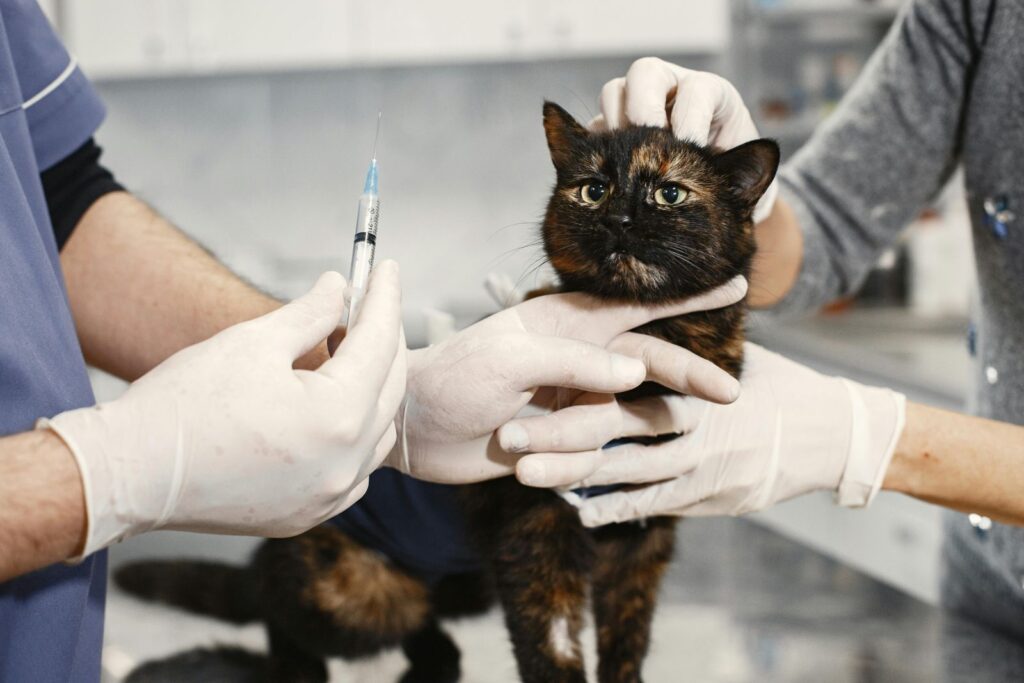
The chances a cat develops diabetes range from 0.21% to 1.24%.2, 7, 10 Factors that increase the chance a cat will develop diabetes include, obesity, increased age, physical inactivity, and sex (diabetes is more common in male cats).3, 6, 9, 11 Don’t be scared if any of this describes your cat. These factors increase the risk but don’t guarantee diabetes.
Certain cat breeds have shown a higher risk and a lower risk for diabetes.1, 2, 4, 5, 8
| Higher Risk (2.2% chance) |
|---|
| Burmese cats in the UK, Europe, Australia |
| Norwegian Forest cats |
| Russian Blues |
| Abyssinians |
| Tonkinese (cross between Burmese and Siamese) |
| Lower Risk (0.25% chance) |
|---|
| Persians |
| Birman |
| British Short Hair |
| Bengal |
| Ragdoll |
| Exotic |
Symptoms to Look Out For
The most common signs that cat owners will notice include weight loss with no decrease in appetite and increased thirst and urination. (These are some of the same signs for humans). Learn more here.
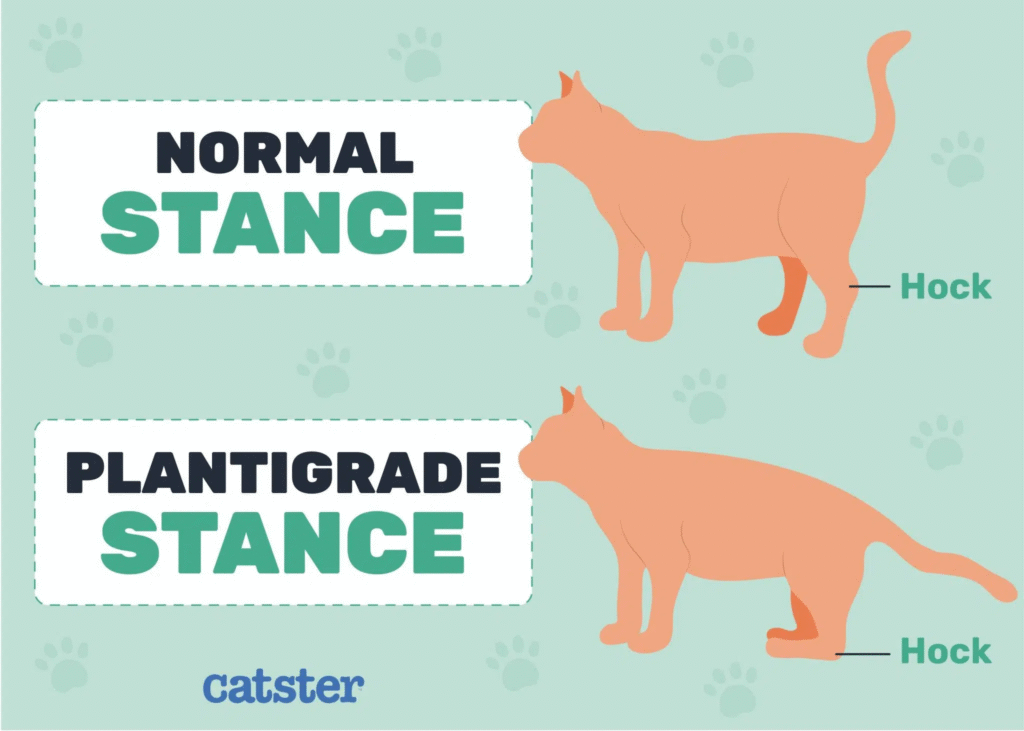
In rare cases (diabetic neuropathy), cats may experience nerve damage in their hind legs. This results in them walking or standing on their hocks or close to the ground. It is NOT painful, and is often resolved with treatment. Learn more about other diabetic neuropathy signs in cats here.
Diagnosis
Your veterinarian will test persistent elevated glucose levels in your cat’s blood and urine. Fun fact, to test a cat’s blood glucose level you prick the inside of their ears. It’s the easiest and most accessible place to get to a cat’s blood.
Treatment Options
The two most common treatments are insulin injections and switching to a low carb diet. Other options include increased exercise and oral medications.
One of the most important things you can do is monitor your cat and maintain open communication with your veterinarian. Just like in humans, each cat is different. They can show different symptoms and require different treatment.
Don’t Worry – Cats Can Still Live Long Happy Lives
Cats with diabetes can live long and happy lives. Don’t consider a diabetes diagnosis a death sentence. As long as you keep up with your regular vet visits and start treatment as soon as possible, you’ll have many long years with your furry feline.
My disclaimer doesn’t fully apply to this situation. But if you have any questions about your cat and diabetes, please contact your vet.
References
1. Lederer R, Rand JS, Honsson NN, et al. (2009). Frequency of feline diabetes mellitus and breed predisposition in domestic cats in Australia. Cet J, 179;254-258. [DOI]
2. McCann TM, Simpson KE, Shaw DJ, et al. (2007). Feline diabetes mellitus in the UK: the prevalence within an insured cat population and a questionnaire-based putative risk factor analysis. J Feline Med Surg, 9;289-299. [PMC free article]
3. Nguyen CT, Pham NM, Lee AH, et al. (2015). Prevalence of and risk factors for type 2 diabetes mellitus in Vietman: a systemitic review. Asia Pac J Public Health, 27;588-600. [DOI]
4. Ohlund M, Fall T, Strom Holst B, et al. (2015). Incidence of diabetes mellitus in insured Swedish cats in relation to age, breed and sex. J Vet Intern Med, 29(5);1342-1347. [PMC free article]
5. O’Niell DG, Gostelow R, Orme C, et al. (2016). Epidemiology of Diabetes Mellitus among 193,435 Cats Attending Primary Care Veterinary Practices in England. J Vet Intern Med, 30(4);964-972. [DOI]
6. Panciera DL, Thomas CB, Eicker SW, et al. (1990). Epizootiologic patterns of diabetes mellitus in cats: 333 cases (1980-1986). J Am Vet Med Assoc, 197;1504-1508. [PubMed]
7. Prahl A, Guptill L, Glickman NW, et al. (2007). Time trends and risk factors for diabetes mellitus in cats presented to veterinary teaching hospitals. J Feline Med Surg, 9;351-358. [PMC free article]
8. Rand JS, Bobbermien LM, Kendrikz JK, et al. (1997). Over representation of Burmese cats with diabetes mellitus. Aust Vet J, 75;402-405. [DOI]
9. study Restine LM, Norsworthy GD, Kass PH. (2019). Loose-control of diabetes mellitus with protamine zinc insulin in cats: 185 cases (2005-2015). Can Vet, 60;399-404. [PubMed]
10. Sallander M, Eliasson J, Hedhammer A. (2012). Prevalence and risk factors for the development of diabetes mellitus in Swedish cats. Acta Vet Scand, 54;61. [PMC free article]
11. Slingerland LI, Fazilova VV, Plantinga EA, et al. (2009). Indoor confinement and physical inactivity rather than the proportion of dry food are risk factors in the development of feline type 2 diabetes mellitus. Vet J, 179;247-253. [DOI]