
Comparing CGMs – Dexcom G7 vs FreeStyle Libre 3
One of the technical advances in diabetes technology are continuous glucose monitors (CGM). They are wearable devices that track blood sugar levels in real time. Before CGMs and for those who do not use one, the most common way to check blood sugar levels is to use a blood glucose meter, needing to prink your finger each time you want a reading. A type 1 diabetic uses a CGM for many reasons. Everyone should talk to their doctor about using or not using one prior to making any final decisions. (Please read my disclaimer).
My CGM Use
Over the past 10+ years I have episodically used CGMs. When I wasn’t using a CGM, I used a blood glucose meter. There were many reasons why I didn’t always have a CGM. The most prevalent reason was if my health insurance made the CGM too expensive. Changes in health insurance over the years is why I’ve used two different CGM brands. This is not the blog post to go into my opinion and history with health insurance, that post will come at some point in the future.
The two different monitor brands I have used are the Dexcom and FreeStyle Libre. I have used two different Dexcom monitors, the G6 and the G7. I have only used one from Freestyle, the Libre 3. Just like all things, there are pros and cons to each monitor.
The following are my comparisons and personal pros and cons from my experience with using each of these two CGM brands. This might not be everyone’s experience.
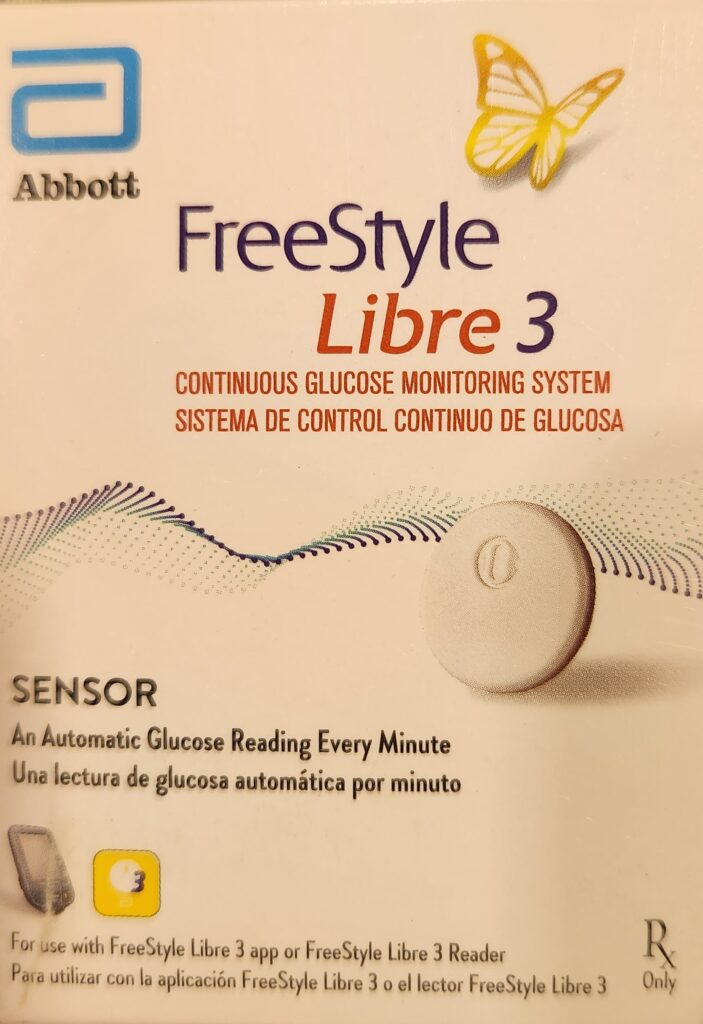
CGM Comparisons
| Dexcom G6/G7 | FreeStyle Libre 3 |
|---|---|
| slightly larger sensor | slightly smaller, thinner sensor |
| requires additional adhesive patch | no extra adhesive needed |
| one sensor lasts 10 days | one sensor lasts 14 days |
| looses connection less frequently | looses connection more frequently |
| app is more user friendly | app is less user friendly |
| 30 minute start up period for each new sensor | 60 minutes start up period for each new sensor |
| 12 hour grace period when sensor time runs out | no grace period when sensor time runs out |
| slightly easier to apply a new sensor | slightly more cumbersome to apply a new sensor |
| alarm is quieter (it doesn’t wake me up from sleeping) | alarm is louder (it wakes me up from sleeping) |
| phone battery lasts a little longer (app takes less battery) | phone battery dies quicker (app drains phone battery more quickly) |
| can’t remember what the Dexcom G7 did when blood sugar levels were changing at a high rate | when blood sugar levels are increasing or decreasing at a high rate, the sensor will disconnect for awhile |
| does not give accurate readings when you are in temperatures below freezing | have yet to be in below freezing temperatures with this CGM |
Comparison – Adhesives
The Dexcom G7 (I don’t remember the adhesives of the G6) comes with an additional adhesive patch that you had to put on over the adhesive that comes attached with each sensor. There seems to be less of a chance they will replace a sensor that fell off if you didn’t put on the additional adhesive. Before the end of the 10 days, my sensor would always start peeling off. Especially if I was working out and sweating a lot and/or was swimming.
The Libre 3 does not come with or require an additional adhesive. The adhesive size that comes attached with each sensor is the same relative size as the adhesive the Dexcom comes with. For whatever reason the Libre 3 adhesive has never started peeling, no matter how much I sweat or how much I swim. I don’t know what the material of each adhesive is or any of the specifics about it. In my experience, the adhesive for the Libre 3 works so much better than the Dexcom G7.
Comparison – Grace Period
On their website it states that “the Dexcom G7 sensor is indicated to be worn for up to 10 days, with a 12-hour grace period at the end.” I personally don’t remember the grace period, probably because I always used the grace period. In writing, it sounds very nice to have a grace period, depending on when your sensor will end. But this wasn’t a pro for me, it was just the way it was. I personally think it is a marketing ploy, but I could be wrong.
The Libre 3 does not have a grace period and per their website “the Sensor can be worn for up to 14 days.” As I already said, for me, having a grace period or not, doesn’t make a brand better or worse. I would just add that extra time on for it to last the regular time + any grace period they would have. But if this matters to you, then great, and make it down as a pro for you.
Comparison – Alarm Volume
Both the Dexcom and the FreeStyle Libre have alarms that sound if your blood sugar is going too low or too high. You can set and change these alarms for both as well. They are both quite loud and will disturb most actions. (The worst for me, is when I am in a movie theater. I am always worried the alarm will go off and people will be mad at me. But it is due to a medial emergency and they can deal with it).
Once asleep, I’m a deep sleeper, which comes in handy when I’m camping or sleeping in a hostel or a communal place. I noticed that the Freestyle Libre alarm will wake me up, the Dexcom alarm will not wake me up. The Freestyle Libre alarm seems to be at a higher pitch and maybe a bit louder. I have not used them at the same time, so I can’t be certain about this. But for whatever reason the Freestyle Libre will wake me up, but the Dexcom didn’t. And according to my roommate, “it’s good that the Freestyle Libre [the one I currently use] wakes you up at night when your blood sugar is low.”

Effects of Cold Temperature
G6
Unfortunately, this one I cannot compare between the two brands. I have only been in freezing cold temperatures while using the Dexcom G6 and G7. This has happened to me while using both the Dexcom G6 and G7.
The first time this happened was when my brother and I were in Iceland, when I was using the G6. Read more about this Iceland trip here. It was below freezing outside and at the time we were not doing any extra activity. We were just getting ready for bed. I noticed that my blood sugar level on the CGM was over 200. I injected, and then realized that I didn’t actually feel like my blood sugar number was high. (ALL continuous glucose monitor instructions say to double check your number before acting on it.)
I double checked and my blood sugar number was in fact around 90. This was a difference of over 100, and my brother and I found this very alarming! The fact that I had just injected was not a good thing, it was going to send my number low. I had to eat more food than normal, which was annoying as I was about to get into bed. This happened another time during this trip, where my continuous glucose monitor was wrong by the same difference, around 100 units.
G7
The next time this happened was when I was in Banff, Canada, and using the G7. It was out cross county skiing while it was snowing. It was so beautiful! Cross country skiing is a lot of work, and I was expecting my blood sugar number to go low at some point. I came prepared with plenty of glucose and snacks. Towards the end of the trail I started to feel like my blood sugar was going low. I stopped and checked my continuous glucose meter and it said I was over 200. I knew that this was wrong and double checked with my glucose meter. My glucose meter said I was around 50. I took off my skis, sat down, ate some glucose, and waited for my number to go back up.
This is something that I will always be aware of and triple check my blood sugar numbers when I am in below freezing temperatures. All insulin and glucose sensors clearly state that they are not to be stored in temperatures that are too cold or too high because it can affect its use. So, it makes sense that wearing them and using them in temperatures that are too cold or too hot could for extended periods effect their use. Please read my disclaimer and contact your doctor if you have any questions.
High Blood Sugar Rate Rise/Fall – Libre
If my blood sugar number is rising or falling at a high rate the FreeStyle Libre will lose connection/stop sending numbers over to the app for around 5-30 minutes. I don’t know if the sensor can’t handle the high rate of change or what, but this happens very consistently. Ideally, my blood sugar number wouldn’t rise and fall at a fast rate, but sometimes it does.
Luckily, when this happens I already know that my blood sugar is going high or low, and act accordingly. This wasn’t something that I remember happening with the Dexcom.



One Comment