Creating a Diabetic D&D Character – Disabilities in D&D
Dungeons and Dragons (D&D) is a table top role-playing game where players sit around an in-person or virtual table to tell a cooperative story with their imagination and rolling a lot of dice. Characters are created and these characters go on adventures led by a dungeon/game master.
Historically D&D, and many other games, didn’t have characters with disabilities. Luckily that’s been changing.
History of Disabilities in D&D
The first edition of D&D was published in 1974, and this game has a long history of its own. There are multiple editions and expansions to the game, adding and changing rules each time.
But it wasn’t until 2020 where disabilities were introduced for accessibility’s sake. It started with Sara Thompson’s Combat Wheelchair and Jennifer Kretchmer’s Accessible Dungeon in the Candlekeep Mysteries adventure book.
Before 2020 there were some D&D characters with disabilities and items used to combat these disabilities. Although these weren’t solely introduced for accessibility’s sake, they’re still a part of this story. Some of these include the character Theros Ironfeld from Dragonlance who has a silver prosthetic arm and the item Ersatz Eye which is a magical prosthetic eye.
Since then, online and in person discussions have begun to help increase the ability to create and play a D&D character with a disability. D&D has a lot of rules and stats, and the fact that people are now creating home brew rules and sharing these rules is a wonderful thing.
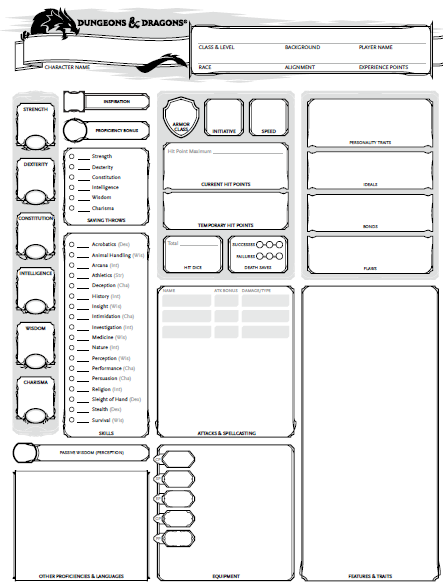
Creating a D&D Character
The first thing you do before you play D&D is create a character. There are many things to choose for your character – appearance, personality, spells, and weapons. The options for character creation are endless.
Most of the time (in my experience) people don’t think about or choose to create a disabled character. But thanks to “Limitless Heroics”, it’s easier than ever to make one.
Finally, a Book for Creating Characters with Disabilities
Wyrmworks Publishing went one step further and made and published “Limitless Heroics: Including Characters with Disabilities, Mental Illness & Neurodivergence in Fifth Edition” (not sponsored).
Before we get into the Diabetes section of this book, there are some important points in the introduction. The book states, “…these are fantasy disabilities designed to work within the rules of fifth edition in a fantasy world. They are not intended to be exact duplicates of real-world disabilities.” The reader’s encouraged to use these stats in whatever way works best for them.
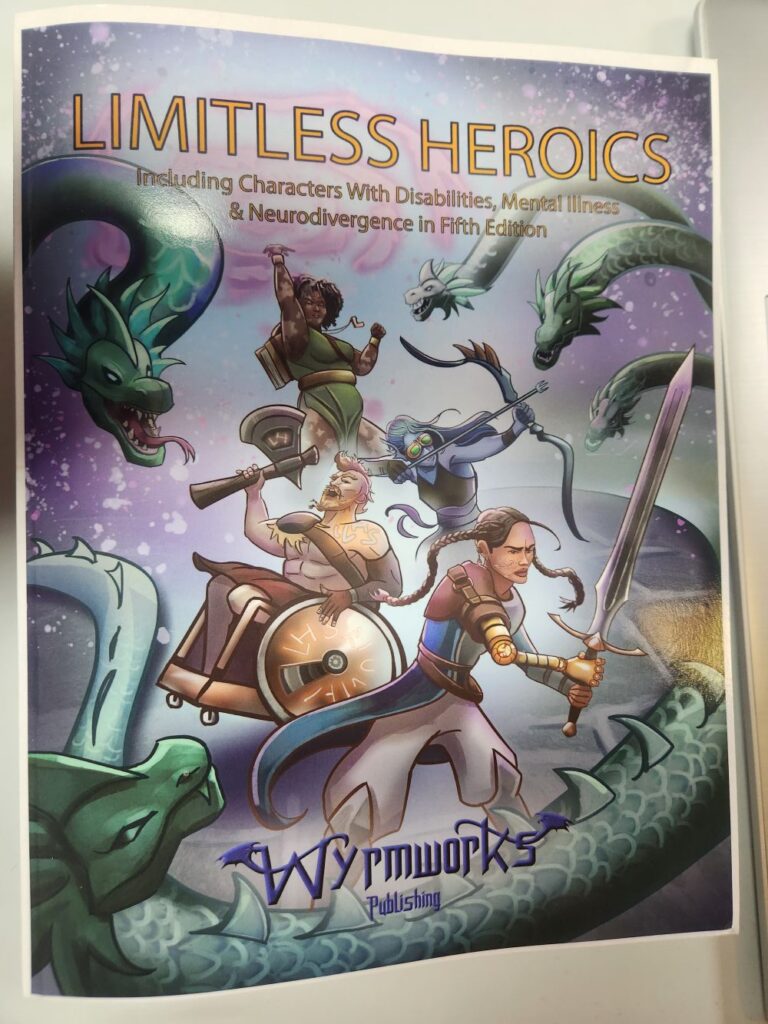
Diabetes Section of the Book
Now, for the best part (I may be biased) – making a Diabetic character! The book breaks down a few metrics; Hyperglycemia, Hypoglycemia, Assistive Options, and Magical Assistance.
Hyper- and Hypoglycemia are the most important to choose and understand. The book allows you to choose or roll dice to see if your character will be afflicted by one or both of these.
Hyperglycemia
What happens to your character if they eat too much food in a short time frame? The answer is determined by rolling a Constitution Saving Throw. A Saving Throw’s used to see if your character can avoid some negative affect.
A successful save means that your character isn’t affected by Hyperglycemia and carries on as usual.
On a failed saving throw your character develops a listed condition – including nausea and confusion. To get rid of Hyperglycemia and this condition your character will need to take a short rest. A Short Rest allows characters to recover and heal a bit, you can think of it (kind of) like taking a nap.
Hypoglycemia
After a period of time where your character hasn’t eaten, their blood sugar can start going low. If this happens your character must make a Constitution Saving Throw every minute they don’t eat.
Just like for Hyperglycemia, a success means your character isn’t affected.
Until you make a successful saving throw, each failed save adds additional conditions to your character – including tremors and agitation. Eating something is the only way to end Hypoglycemia and accompanying condition/s.
Assistive Options and Magical Assistance
Because D&D is a fantasy world there’s fun magic you can use. Sometimes magic isn’t an option, in this case there are non-magic options available. The book discusses different spells, magic, and non-magic items that can help with in-game Diabetes.
Now It’s Your Turn
Now that you know these character stats, it’s time to create and play your own diabetic character.
D&D is a game for you, your friends, and your imagination. If some of the rules don’t work for you, change them. Find the right people and play in the most fun way. The only limit is your imagination.
To learn more about real world influences in fantasy and science fiction read my post, “The People That Help Put the Science in Science Fiction”