Comparing CGMs Part 2 – Dexcom G7 vs FreeStyle Libre 3+
Get ready for part 2 of the Continuous Glucose Monitor (CGM) comparison!
One of the technical advances in diabetes technology are CGMs. They are wearable devices that track blood sugar levels in real time. Before CGMs and for those who do not use one, the way to check blood sugar levels is to use a blood glucose meter. This requires people to prink their finger with a needle each time you want to check. Anyone interested in learning more about CGMs should talk to their doctors about it. Please read the first part of this comparison published in early 2025.
My CGM Use
Over the past 10+ years I have episodically used CGMs. When I wasn’t using a CGM, I used a blood glucose meter. There were many reasons why I didn’t always have a CGM. The most prevalent reason was that my health insurance made the CGM too expensive. Continued changes in jobs, health insurance, and doctors is why I’ve used two different CGM brands. In the past few years, I have been wearing CGMs more regularly which is why I can create a new CGM comparisons blog post!
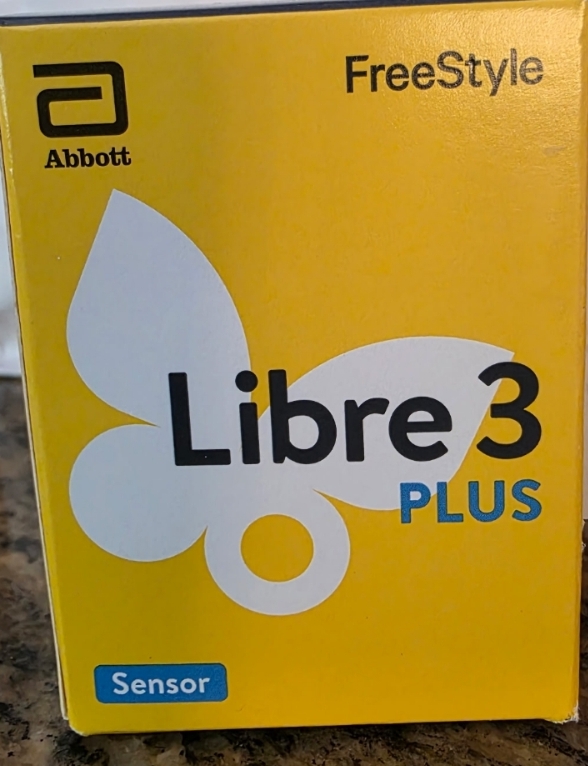
The two different monitor brands I have used since my last comparison blog post are Dexcom and FreeStyle. This comparison is between the Dexcom G7 (not the 15 day) and the Freestyle Libre 3+. Just like the first blog post there are similarities, differences, pros, and cons to each monitor.
The following are my comparisons from my own personal experience with using each of these two CGM sensors. This might be be everyone’s experience.

CGM Differences
| Dexcom G7 | Freestyle Libre 3+ |
| large sensor | smaller, thinner sensor |
| given additional adhesive patch | no extra adhesive given |
| lasts 10 days | lasts 14 days |
| app is more user friendly | app is less user friendly |
| 26-minute start up period | 60-minute start up period |
| 12-hour grace period when sensor time runs out | no grace period when sensor time runs out |
| alarm is quieter | alarm is louder |
| can change volume of the alarms | cannot change volume of the alarms |
| more expensive | less expensive |
| CGM’s average blood sugar number was higher than my A1C | CGM’s average blood sugar number was very close to my A1C |
CGM Similarities
| Putting on the CGM is easy and does not take a lot of time or effort |
| Does not give accurate readings when you’re in freezing temperatures |
| Do not usually lose connection when your blood sugar is rising or falling as a fast rate |
Comparison – Adhesives
The Dexcom G7 updated their adhesive to be much sticker than it used to be. Even though it is a lot more adhesive they still give you an additional patch that you put over the sensor’s adhesive. Before the changed their adhesive, my sensor would always start peeling off before the end of the 10 days. Now, there wasn’t any peeling or coming off. It was actually difficult to take the sensor off at the end of the 10 days. And most of the time when I took off the sensor there was still adhesive stuck on my skin. I needed to use skin oil to get all of it off.
The Libre 3+ does not come with or require an additional adhesive. The adhesive size is the same relative size as the adhesive the Dexcom comes with (not the additional one). In the time since my last post, it doesn’t seem like they have changed their adhesive. Unless I was working out a lot and my arms were sweating multiple times within the 10 days, the sensor would not start peeling.
In my experience the updated adhesive works better than the Libre 3+. But it does leave residue on your skin when you’re done with the sensor, which is annoying.

Comparison – Grace Period
On their website it states that “the Dexcom G7 sensor is indicated to be worn for up to 10 days, with a 12-hour grace period at the end.” In writing it sounds very nice to have a grace period depending on when your sensor will end. But this wasn’t a pro for me because you kept having to click that you still wanted the grace period. If you finger slipped or you were not paying full attention it was easy to accidently press the wrong button and have the grace period and sensor end.
The Libre 3+ does not have a grace period and per their website “the Sensor can be worn for up to 14 days.” For me, having a grace period (or not), doesn’t make a brand better or worse.
I do like how the Libre 3+ lasts 14 days instead of 10 days. I do know that Dexcom just came out with a 15-day sensor, but I haven’t used that one so I can’t comment on it.
Comparison – Alarm Volume
Both the Dexcom and the FreeStyle have alarms if you blood sugar goes too low or too high. You can change the blood sugar level that these alarms will go off for both sensors as well. They’re both quite loud and will disturb most actions.
Once I’m asleep, I’m a deep sleeper, which comes in handy when you are camping, sleeping in a hostel, or a communal place. But it isn’t always nice. I noticed that the Freestyle alarm will wake me up, but the loudest Dexcom alarm will not wake me up. The Freestyle alarm seems to be at a higher pitch and maybe a bit louder. I have not used them at the same time, so I cannot be certain about this. But for whatever reason the Freestyle will wake me up, but the Dexcom doesn’t.
I do like that Dexcom has updated their alarm setting so you can change the volume of the alarm. This came in handy when in a movie theater or meeting when you need to be quiet. I could just set the alarm to vibrate and it wouldn’t disturb anyone if it went off. But I would still notice the alarm. The Freestyle does not allow you to change the alarms. Which is a downside in my book.